What this summer reminded me about the work of science.
This summer has been a series of see-saw events in science: incredibly busy, incredibly challenging, incredibly emotional – but always pointedly reminding me why I do this work. Why I love this work.
As you may recall in my last letter, the summer got off to a rough start for science. News from the Office of Management and Budget (OMB) proposed that decision-making for federal grant funding would, beginning in October, shift from scientific experts to political appointees. Then came the events at the American Diabetes Association annual conference, where our nation’s leading diabetes experts were removed from the meeting after sharing their ADA-published editorial criticizing federal funding cuts to diabetes research. This censorship has regrettably continued with the the refusal to publish editorials about the meeting despite Diabetes Care Editor-in-Chief Dr. Steven Kahn’s contracted editorial independence.
But in the midst of all this, there were brighter moments too. Scientists and community members came together to defend science, submitting tens of thousands of public comments, overwhelmingly negative, about the public OMB proposal. In response, the senate has since voted to delay implementation of these rules until December. More than 200 ADA members have also signed an open letter calling for leadership resignation following the events at the conference. These moments reminded me that the scientific community is willing to stand together when it matters, and just how many people in our country still value science and the work we do.
But there is still much to fight for, including NIH’s recent proposal (commentary here) to withhold grant scores and percentile rankings with applicants and program officers, the field experts tasked with prioritizing and recommending applications for funding. As an NIH grant reviewer, I find it dismissive of my hard work to fairly score these applications, as a funded NIH-scientist, I find it frustrating as this can only lead to less transparency in funding decisions. The public comment period is open until October 13th if you wish to voice your opinion here.
And in the face of all of this, I have again been far too quiet. I have constantly wondering whether I am doing enough. But I’ve also been incredibly busy.
Busy doing science.
This summer marked several incredible experiences that reminded me why I chose this career in the first place. First, in early July, we finally received our funding notice for an NIH project grant we originally submitted in October 2024, before all of the recent political upheaval at NIH began. A top-scoring application that has spent a year and a half in limbo, had finally arrived. And with it the incredible joy I have in knowing that I get to do this science and bring this important knowledge to the world.
Stay tuned, as I’ll soon be writing a summary of the research this grant will support.
We also welcomed two wonderful undergraduate interns to the lab this summer. One returning from last year and one joining us for the first time. And I found myself back in the laboratory almost every day, training them and working alongside them on a new project.
Back in 2020, when the world shut down, I also shut down my my lab. We all shifted to data analysis, writing, tests at home. When we reopened, I did not return to bench work. So much had changed. My schedule no longer accommodated weeks-long cell cultures or full days in the lab. I was pulled in too many directions, and still am. But this summer I finally picked up my pipettes again. I purposefully designed shorter experiments that the interns could complete in their short summer, selecting new protocols that the interns and I could learn together. Though I still didn’t really have the time, it was wonderful to be back at the bench. Not only was I able to train and troubleshoot the new protocols with the interns, I had a blast doing it.
By the beginning of August, we had learned a ton, optimized three protocols new to the lab, collected data in 5 participants, and just had a simply amazing time. Certainly, this pace was exhausting, while trying to keep up with my ‘other’ work, but this was also a wonderful reminder of what drew me to science in the first place. Truly, from a very young age, have loved trying to figure out how things work, and bench science gives me a space to do that in the short-term (getting an assay to work), and in the long-term (investigating the underlying biology contributing to obesity). I also learned that I could still make time for this work. And that I’d be a better, more engaged scientist for it.
I’ll also be writing about this project soon.
We were also thrilled to welcome our new postdoctoral fellow, Mohammed, to the lab. Mohammed was a physician in his home country of Libya before coming to the United States just three years ago. In that short time, he worked his way from delivering Amazon packages to earning a funded postdoctoral fellowship at our research institution, with the long-term goal of returning to the clinic one day to help treat children with diabetes. Having never worked in a wet lab before, Mohammed has faced an understandably steep learning curve. But he is a quick learner and conscientious technician, already leading cell culture experiments and sample collection for one of our ongoing studies. This first project will help him become comfortable in the lab with our standard protocols, and by the time he finishes in a few months I anticipate he will be ready to conceive and design his own research studies.
I can’t wait to see where he takes this opportunity.
Outside the laboratory, much of my summer has been spent on data analysis, something that fits much more easily into the little pockets of time I have available between meetings, teaching, and family life. This summer I’ve been developing our new analysis pipelines for large-scale protein datasets, or proteomics. For those unfamiliar, rather than measuring one protein at a time, proteomics allows us to measure thousands simultaneously and ask how patterns among many proteins and biological pathways differ between groups. This summer, I analyzed proteomic data measured in skeletal muscle stem cells collected during pregnancy (you can learn more about those here and here), and in stem cells from the infants’ umbilical cords after they were born. Our goal is to understand how habitual exercise before and in early pregnancy impacts fetal stem cell biology.
I’ll be sharing more about those findings soon as well.
Meanwhile, we’ve spent the last year without a lab manager, and our senior postdoctoral fellow needed to take an unexpected leave. So, much of my summer has been devoted to hiring: reviewing applications, interviewing, checking references, restarting the search after candidates fell through…working to rebuild our lab leadership. I’m very happy to share that our new lab manager will be joining us on September 1st. I couldn’t be more excited!
It has been an incredibly busy summer. Exhausting really. Which is why I haven’t had the time, or honestly the energy, to write here as much as I’d hoped. But during this time there have been so many moments that have reminded me why I do this, reminded me of my love for science, the scientists I work with, and the teaching that I do. The intern who told me she was planning to switch to a cell culture laboratory when she returned to her home university because she loved the work we do so much. The postdoc whose whose eyes widened with excitement when we talked about how all of our projects fit together to better understand child health, and how one day he could design studies of his own to help prevent childhood diabetes—a path he never had access to in his home country. The hug I received from Steven Kahn when he recently visited our campus, thanking me for this work I do writing about science, as I thanked him for his work fighting for science too.
These moments reminded me that science isn’t just the grants we receive or the policies we rally against. Science is the education, the mentorship, the people. These are the parts of science that I hope to bring to you all. In the end, I feel incredibly privileged to be able to follow my curiosity daily. In helping others see the world a bit differently. To ask questions and seek answers.
I have many colleagues, scientists who are not yet U.S. citizens, or who otherwise feel they cannot safely speak out against the attacks on science. They lament they are not doing enough, but are fearful. When they tell me this, I remind them that not everyone has to fight the same battles in the same way. I am happy to speak for them. But I also need that reminder too sometimes. For the days when I feel like I’m not doing enough, not writing enough, not speaking up loudly enough for science, I remind myself that sometimes—many times—simply doing science is speaking up enough.
Sometimes, the most important thing we owe the world as scientists, is to just keep doing the work.
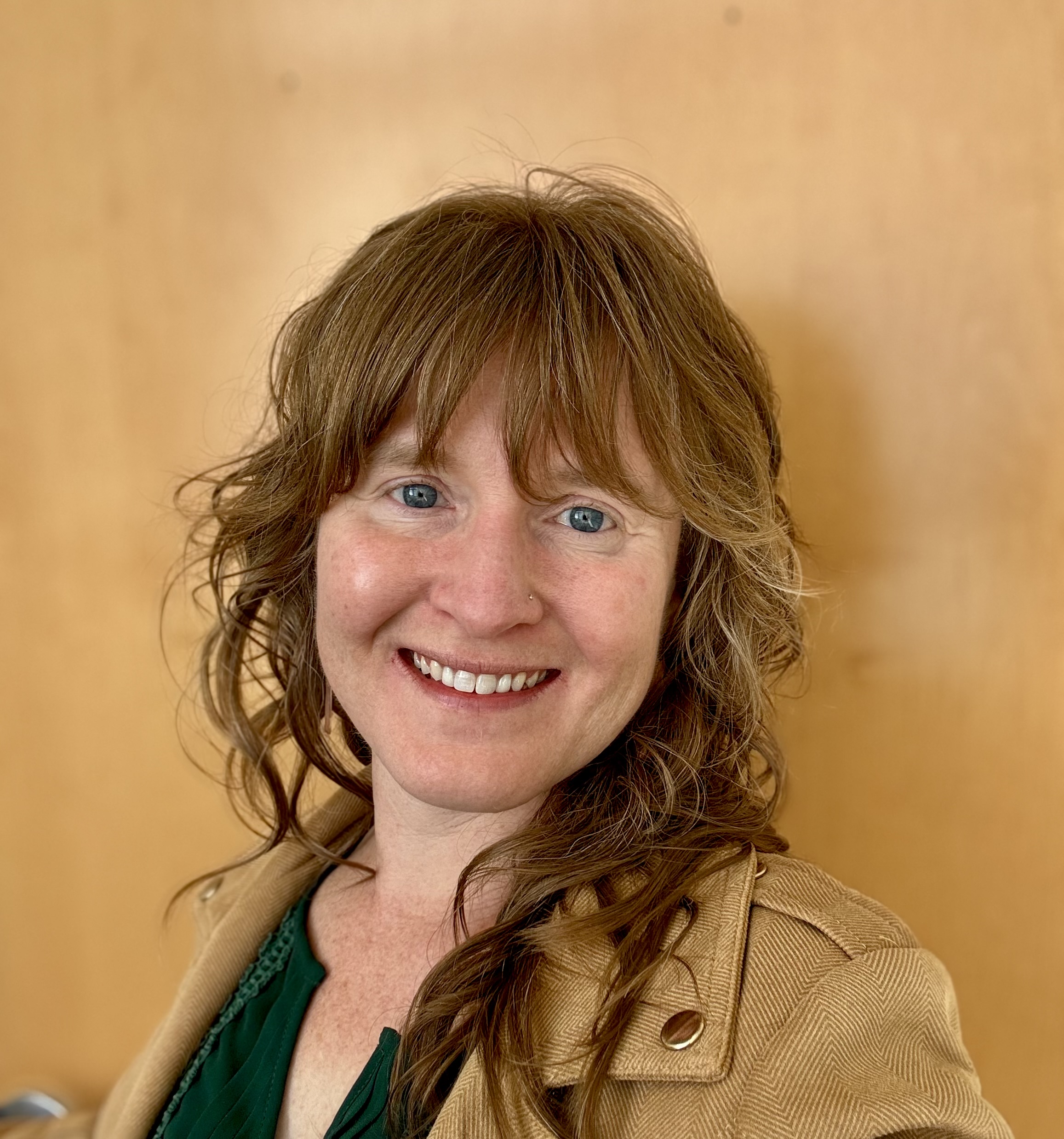
Kristen Boyle, PhD
Dr. Kristen Boyle is a Professor of Pediatrics at the University of Colorado School of Medicine, where she leads the Molecular Health Lab. Her work examines how early life shapes lifelong health. She writes about how science works, how we interpret evidence, and how we can make sense of uncertainty.